
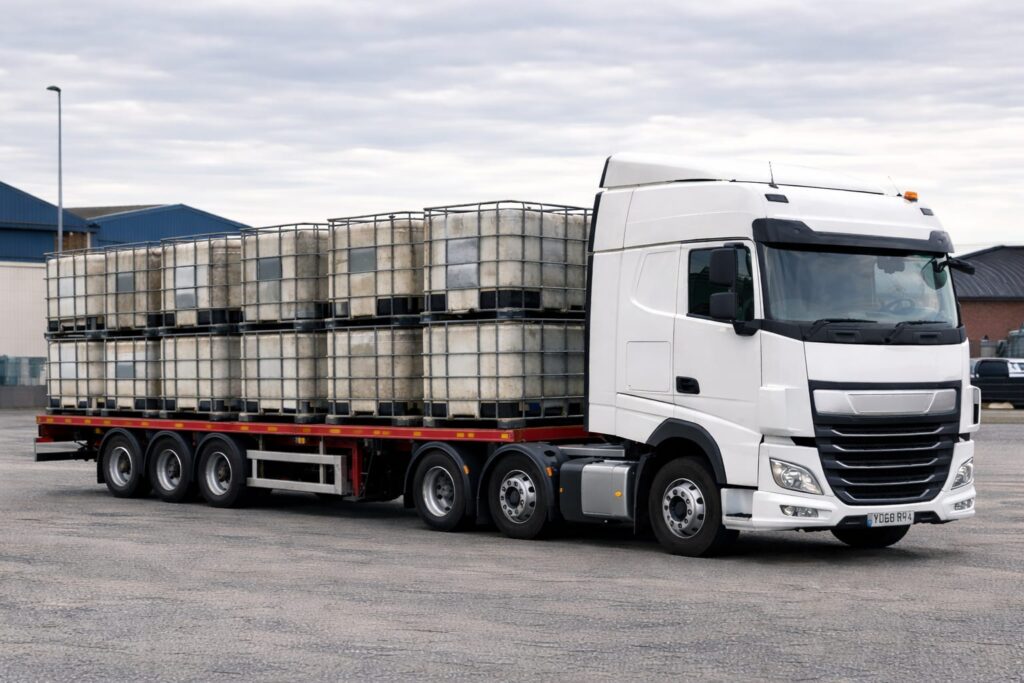
Across the chemical, food, coatings and manufacturing industries, thousands of Intermediate Bulk Containers (IBCs) are transported every week to external cleaning facilities. For many years this has simply been the standard way of managing container reuse. But with rising fuel prices, increasing logistics costs and tightening supply chains, manufacturers are beginning to ask a simple question:
Does it still make sense to transport empty containers for cleaning?
The Hidden Cost of Moving Empty Containers
At first glance outsourcing IBC washing appears straightforward. Containers are loaded onto a truck, transported to a cleaning facility and returned ready for reuse. However, the real cost often goes far beyond the cleaning fee.
Companies typically need to account for:
- transporting empty containers
- rising diesel and haulage costs
- handling and storage
- waiting for containers to be returned
- additional container inventory during turnaround
IBCs are bulky and occupy significant trailer space. In many cases companies are effectively paying to move empty containers long distances simply to have them washed.
As transport costs rise, this can quickly become one of the largest hidden expenses in container management.
Energy price volatility continues to influence industrial transport and logistics costs worldwide.
https://www.eia.gov/energyexplained/oil-and-petroleum-products/prices-and-outlook.php
The Cost of Transporting Containers
Consider a manufacturing site sending 40 IBC containers per week to an external cleaning contractor. Over the course of a year this could involve transporting more than 2,000 containers to a cleaning facility. Once transport, cleaning charges, container downtime and additional container inventory are considered, the total cost can quickly reach tens of thousands of pounds per year, depending on transport distance and cleaning requirements.
This is why many operations managers are now reviewing whether in-house container washing could reduce overall operating costs.
Why More Companies Are Washing IBCs In-House
Installing an IBC washing system within a manufacturing facility allows containers to be cleaned immediately after use and returned straight back into production. Instead of waiting days for containers to return from a cleaning contractor, they can often be cleaned and reused within minutes.
Benefits can include:
- reduced transport costs
- faster container turnaround
- lower container inventory requirements
- greater process control • improved sustainability
Rotajet RJ-ICS IBC Cleaning Station
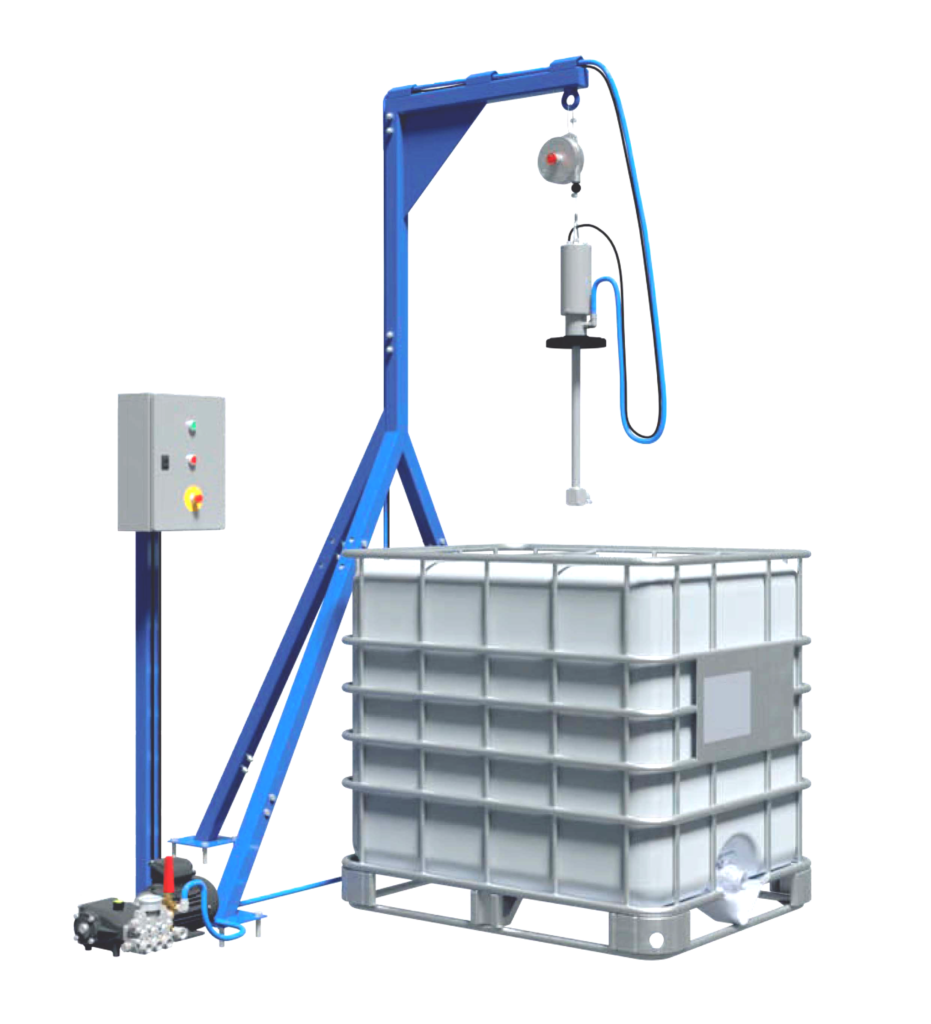
One example of a compact in-house solution is the Rotajet RJ-ICS IBC Cleaning Station.
The RJ-ICS uses a 360° rotating spray nozzle to clean the internal surfaces of IBC containers quickly and efficiently.
Learn more https://drumwashing.com/ibc-cleaning-station/
Because the system relies primarily on high-pressure washing rather than heavy chemical use, it can deliver effective cleaning while keeping operational costs low.
Watch the RJ-ICS in Operation
IBC Washing:
Industrial container washer:
Other Rotajet IBC Washing Equipment
For facilities processing higher container volumes, Rotajet also manufactures modular IBC washing and reconditioning equipment, including:
- internal washing systems
- external container washers
- IBC dryers
- vacuum recovery systems
- pressure testing stations
- automated IBC washing lines
Explore the full range
https://drumwashing.com/ibc-cleaning
Buy, Rent or Contract Container Cleaning
Every manufacturing operation is different, which means the most efficient container cleaning strategy depends on container volumes, contamination levels and logistics costs.
Companies reviewing their IBC cleaning process generally consider three options.

Buy – In-House Equipment
For facilities processing large numbers of containers, installing an in-house washing system can provide the greatest long-term savings and operational control.
Containers can be cleaned immediately after use and returned straight back into production.
Rent – Lower Initial Investment
Some manufacturers prefer to introduce container washing through equipment rental.
This allows companies to bring cleaning in-house without a large upfront investment while still reducing transport costs and improving container turnaround.
Rental solutions can also be useful for:
- trial periods
- temporary capacity increases
- new production lines


Contract Cleaning – For Smaller Volumes
For facilities handling smaller container volumes, outsourced cleaning may still be the most practical solution.
Rotajet works with a network of industrial container processing facilities across the UK and Europe and may be able to help identify local cleaning providers, reducing transport distances and overall costs.
Supporting the Circular Economy
Bringing container cleaning back into the production process also supports circular economy initiatives.
Instead of transporting containers long distances for cleaning, manufacturers can:
- wash containers on-site
- reuse containers immediately
- reduce packaging waste
- reduce transport emissions
According to the Ellen MacArthur Foundation, reuse systems are one of the most effective ways to reduce packaging waste and improve resource efficiency.
https://ellenmacarthurfoundation.org/topics/circular-economy-introduction
Frequently Asked Questions
How long does it take to wash an IBC container?
Most industrial IBC washing systems can clean containers in 3–10 minutes, depending on contamination levels and the washing process used.
Can IBC containers be reused after washing?
Yes. IBCs are designed for multiple reuse cycles when properly cleaned and inspected.
Is it cheaper to wash IBCs in-house?
For companies processing large numbers of containers, washing IBCs internally can significantly reduce transport costs, container turnaround times and packaging inventory requirements.
What industries use IBC washing systems?
IBC washing systems are widely used in:
- chemical manufacturing
- food processing
- coatings and paints
- lubricants and oils
- recycling operations
A Question Many Manufacturers Are Now Asking
With rising transport costs and increasing pressure on supply chains, many manufacturers are reviewing how they manage container cleaning.
In some cases outsourced washing will continue to make sense.
But for others, transporting empty containers for cleaning may no longer be the most efficient option.
Is it time to rethink how IBCs are cleaned and reused?
Interested to hear how other manufacturers are approaching container cleaning. Are more companies bringing washing back in-house?